
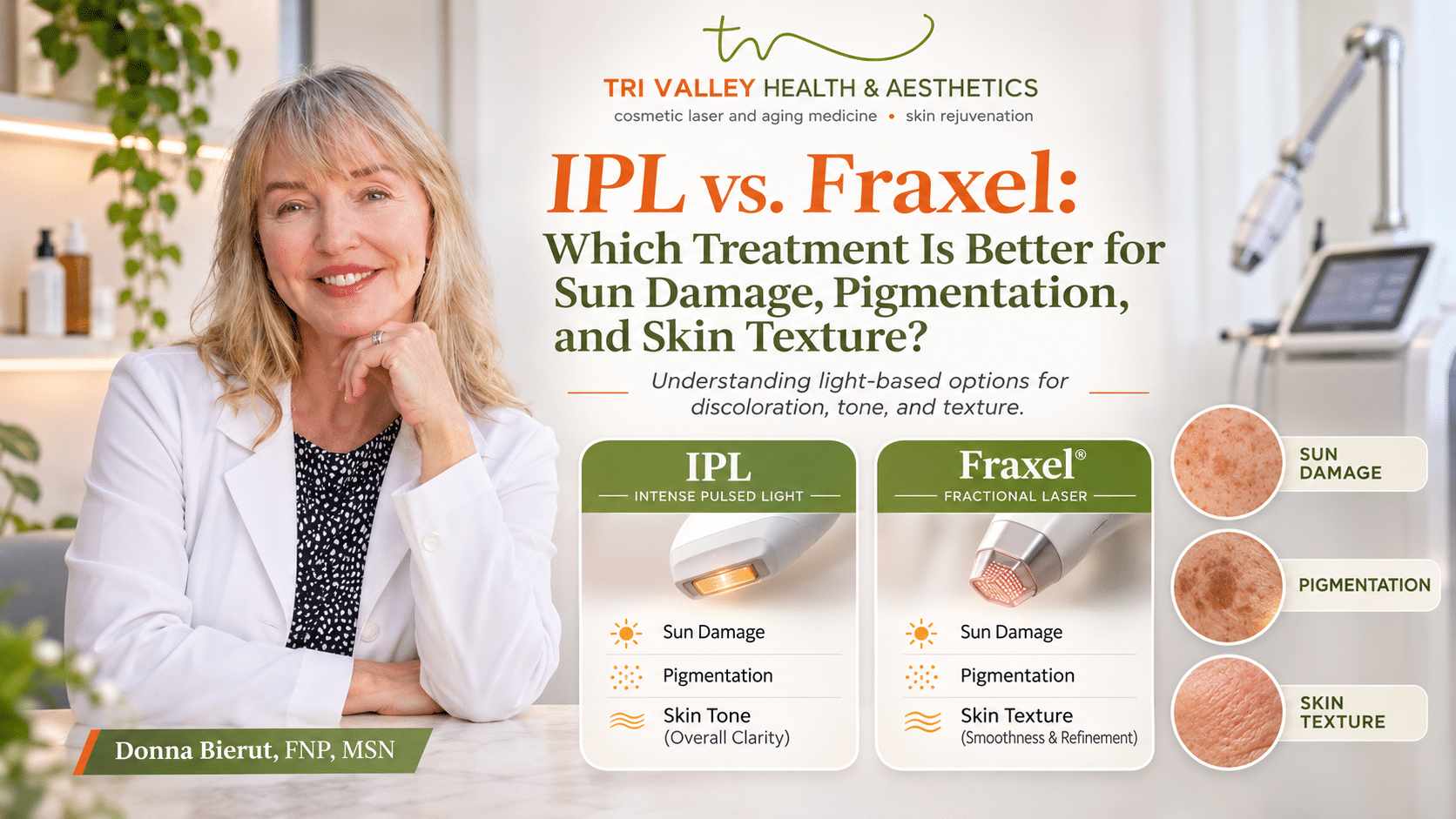
Intense Pulsed Light (IPL) and Fraxel laser therapy can both appear in conversations about photodamage and skin rejuvenation, but they are not the same technology. IPL delivers a broad range of light wavelengths, while a laser delivers a more specific beam or narrow wavelength range. Fraxel is a fractional laser platform that treats microscopic portions of skin rather than exposing the entire surface uniformly.
That difference affects what each treatment is commonly used to target. Consumer guidance from ARPANSA describes IPL as a broad-spectrum light technology often used for superficial pigmentation, redness, and photorejuvenation, while lasers can be selected for more targeted or deeper procedures such as resurfacing and scar reduction.
Quick Answer
IPL and Fraxel address overlapping but different concerns. IPL uses broad-spectrum pulsed light and is commonly discussed for visible pigment and vascular concerns such as brown spots and redness. Fraxel uses fractional laser energy for resurfacing and selected pigment, texture, scar, and fine-line concerns. The better option depends on your primary target, skin type, sun exposure, recovery preference, and the exact device/settings recommended.
In This Guide
- The Quick Difference: Broad-Spectrum Light vs. Fractional Laser
- How IPL Works
- How Fraxel Works
- IPL vs. Fraxel for Brown Spots and Sun Damage
- IPL vs. Fraxel for Redness, Fine Lines, and Texture
- Which Treatment Has More Downtime?
- Skin Tone, Sun Exposure, and Pigmentation Risk
- Can IPL and Fraxel Be Part of the Same Plan?
- Choosing IPL or Fraxel in Coeur d’Alene
- Frequently Asked Questions
- Resources
The Quick Difference: Broad-Spectrum Light vs. Fractional Laser
IPL is often called a photofacial, but it is not a laser. It uses a range of light wavelengths that can be filtered and adjusted for different targets. Fraxel is a fractional laser platform: laser energy is delivered in microscopic treatment zones, leaving surrounding areas untreated between those zones so the skin can remodel during healing.
Brown spots / visible sun damage
- IPL Discussion: Often discussed for superficial pigmented lesions and photodamage
- Fraxel Discussion: May be considered for selected pigment plus resurfacing goals
Redness / visible vessels
- IPL Discussion: A common light-based treatment discussion area
- Fraxel Discussion: Not the main comparison point; depends on device and diagnosis
Fine lines / texture
- IPL Discussion: May improve the overall appearance of photodamaged skin in selected patients
- Fraxel Discussion: Fractional resurfacing is more directly aligned with texture and fine-line remodeling
Acne scars
- IPL Discussion: Not usually the primary IPL use case
- Fraxel Discussion: Fractional laser may be considered depending on scar type and skin characteristics
Recovery
- IPL Discussion: Varies by settings and response
- Fraxel Discussion: Varies by wavelength, intensity, device and treatment depth
How IPL Works
A U.S. FDA device summary explains that IPL systems differ from lasers because they deliver many wavelengths in a pulse rather than a single laser wavelength. Those wavelengths can be filtered to target chromophores such as pigment or blood-related color in the skin.
Tri Valley’s current IPL page describes its system as using IPL together with radiofrequency energy for pigmented and vascular lesions. Because device combinations and settings matter, the article should not assume every IPL platform behaves exactly the same way or that every pigmentation concern is appropriate for IPL.
Independent guidance from ARPANSA characterizes IPL as a wide-spectrum light source more commonly used for superficial procedures such as pigmentation correction, redness reduction, and photorejuvenation. Treatment outcomes and risk still depend heavily on skin color, the target being treated, and operator/device settings.
How Fraxel Works
Fraxel is a brand name used for fractional laser systems. “Fractional” refers to treating many microscopic zones rather than the entire skin surface uniformly. Depending on the specific wavelength and device, fractional lasers can be used for different resurfacing goals.
Tri Valley’s current Fraxel laser therapy page positions Fraxel for concerns such as fine lines, surface scarring, age spots, and sun damage. Because the site does not identify the exact current Fraxel model or wavelength, treatment depth, recovery, and candidacy should be confirmed by the practice instead of inferred from the brand name.
A peer-reviewed overview of fractional laser technology describes multiple non-ablative and ablative fractional laser systems, reinforcing why “Fraxel” or “fractional laser” should not be treated as one identical procedure across devices.
IPL vs. Fraxel for Brown Spots and Sun Damage
For visible brown spots and sun-related discoloration, there is genuine overlap. Mayo Clinic lists both laser and intense pulsed light among procedures used for age spots, while Baylor Medicine describes IPL as useful for many brown/red superficial concerns and Fraxel as an option that can also address texture, wrinkles, and some more stubborn pigment or scar-related concerns.
A systematic review of clinical trials for solar lentigines found that IPL is among the studied treatment options for sun-related lentigines, alongside several laser technologies and other therapies. The review reported variable results across treatments and studies, so it should not be used to promise a specific clearance rate for an individual patient.
The practical distinction is the goal. If the main issue is superficial visible color, IPL may be an appropriate discussion. If pigment is part of a broader texture, scar, or fine-line resurfacing goal, a fractional laser discussion may be more relevant. The diagnosis of the brown spot also matters; not every pigmented lesion should be treated cosmetically without evaluation.
IPL vs. Fraxel for Redness, Fine Lines, and Texture
For redness and visible vessels, IPL is often a more direct part of the conversation because broad-spectrum light can be filtered to target vascular color. ARPANSA specifically lists skin redness and blemish reduction among common IPL/laser cosmetic applications.
For texture and fine lines, fractional laser treatment is generally a more direct resurfacing discussion. Baylor Medicine describes Fraxel as a rejuvenation option for wrinkles, texture, redness, and brown spots, while characterizing IPL more strongly around redness and brown spots with some effect on texture.
This does not mean IPL cannot improve the overall appearance of photodamaged skin or that Fraxel cannot help pigment. It means the main target should drive the conversation rather than choosing based on which name sounds stronger.
Which Treatment Has More Downtime?
Downtime is not a fixed number for either treatment. Baylor Medicine characterizes IPL as a relatively low-downtime option in its practice and Fraxel as a treatment with a more noticeable but still limited recovery profile. Those are examples from one academic dermatology practice, not guarantees for Tri Valley’s protocols.
For Fraxel, recovery depends on the exact wavelength, intensity, number of passes, treatment area, and individual skin response. IPL recovery also varies with fluence, filters, target, and skin type. Ask the treating provider what redness, swelling, darkening/flaking of pigment, or activity restrictions are expected for the exact plan being recommended.
Skin Tone, Sun Exposure, and Pigmentation Risk
ARPANSA notes that outcomes and injury risk from light-based cosmetic procedures depend strongly on physical traits such as skin color, and that improperly performed laser or IPL treatment can lead to persistent pigment changes or scarring. Recent sun exposure or tanning can also change risk and may affect whether treatment should proceed.
Your consultation should therefore include current or recent tanning, history of melasma or post-inflammatory hyperpigmentation, medications or products that increase photosensitivity, prior laser/light reactions, and the diagnosis of any pigmented lesion. A device that is appropriate for one skin type or pigment concern may not be appropriate for another.
Can IPL and Fraxel Be Part of the Same Plan?
IPL and Fraxel may be considered at different points in a longer-term photodamage or skin-rejuvenation plan because they can address different components of the same overall concern. That does not create a universal treatment sequence. Whether they should be staged, alternated, or used at all depends on the diagnosis, skin response, recovery, and the provider’s protocol.
Avoid copying a generic schedule from another clinic or social-media post. Device settings and patient selection matter, and Tri Valley should confirm any specific combination or timing before it appears in patient-facing content.
Choosing IPL or Fraxel in Coeur d’Alene
For laser and light-based treatment planning, Tri Valley’s current contact page routes laser services to Idaho. Patients comparing Intense Pulsed Light (IPL) and Fraxel laser therapy can also review the broader laser treatments in Coeur d’Alene and medical spa in Coeur d’Alene pages.
The most useful consultation question is not “Which machine is better?” but “What is the main thing I want to change, what recovery am I comfortable with, and which technology is appropriate for my skin?” To compare current availability and treatment planning, schedule a consultation.
Frequently Asked Questions
Is IPL the same as a laser?
No. IPL uses a broad spectrum of pulsed light, while a laser produces a more specific beam or wavelength range. Both are light-based technologies, but their energy delivery and treatment targets differ.
Is IPL or Fraxel better for brown spots and sun damage?
Both can be discussed for sun-related pigment, but they are used differently. IPL is often considered for superficial visible pigment and redness, while Fraxel may be considered when pigment is part of a broader resurfacing goal involving texture, scars, or fine lines. The type of pigmented lesion and your skin characteristics matter.
Which is better for redness: IPL or Fraxel?
IPL is often more directly used for vascular color and diffuse redness because its broad-spectrum light can be filtered for vascular targets. Fraxel is generally discussed more for resurfacing, although the exact device and concern can change the recommendation.
Which treatment is better for skin texture and fine lines?
Fractional laser resurfacing is more directly aligned with texture and fine-line remodeling, while IPL is often used primarily for color-related photodamage. However, treatment choice should account for the depth of the concern, skin type, recovery preference, and the exact technology available.
Which has more downtime: IPL or Fraxel?
Fraxel often involves a more noticeable recovery than IPL, but there is no single downtime estimate that applies to every treatment. Settings, wavelength, treatment intensity, skin response, and the condition being treated all affect recovery.
Can IPL and Fraxel be used in the same treatment plan?
They may be considered as part of a staged plan when different concerns need to be addressed, but there is no universal sequence. The treating provider should determine timing based on diagnosis, skin response, recovery, and the devices being used.
Resources
-
- Australian Radiation Protection and Nuclear Safety Agency (ARPANSA): Advice for Consumers — Lasers, IPL Devices and LED Phototherapy
- U.S. Food and Drug Administration: IPL System 510(k) Device Summary — IPL Uses Multiple Wavelengths Rather Than a Single Laser Wavelength
- Baylor Medicine Dermatology: Options for Skin Rejuvenation
- Baylor Medicine Dermatology: Laser Treatment of Brown Spots
- Mayo Clinic: Age Spots — Diagnosis and Treatment
- PubMed: Treatment of Solar Lentigines — Systematic Review of Clinical Trials
- PubMed Central: Update on Fractional Laser Technology
